If you haven't figured it out by now I serve an amazing church! We tend to be active to hyperactive, keep old members & staff around for long tenures plus engage new folk into the life of the congregation, and serve the world in a lot of different ways. Just last week we had one outreach team in Jamaica on a medical mission. We also had a team in Ringgold, GA doing reconstruction on houses damaged by the spring tornadoes that hit Tuscaloosa and continued a line of destruction up into northwest Georgia. And, in addition to our normal ministries, we also had a group staging a huge church yard sale that raised $8100 for local mission and opened the doors of the church to the community.
After such a busy week we enjoyed a guest preacher on Sunday. Have you heard of the author and preacher Max Lucado? It was a great Sunday-- a little Christmas or Easter-- after a very busy week of mission and ministry.
Local Press on Lucado Visit
And, perhaps even better than such great local press, here's what a college student who's moved to our town said about the day in her blog.
What a blessing to serve an amazing church and "run and not grow weary!"
Monday, October 31, 2011


Sunday, October 30, 2011
Another Medical Mission Completed

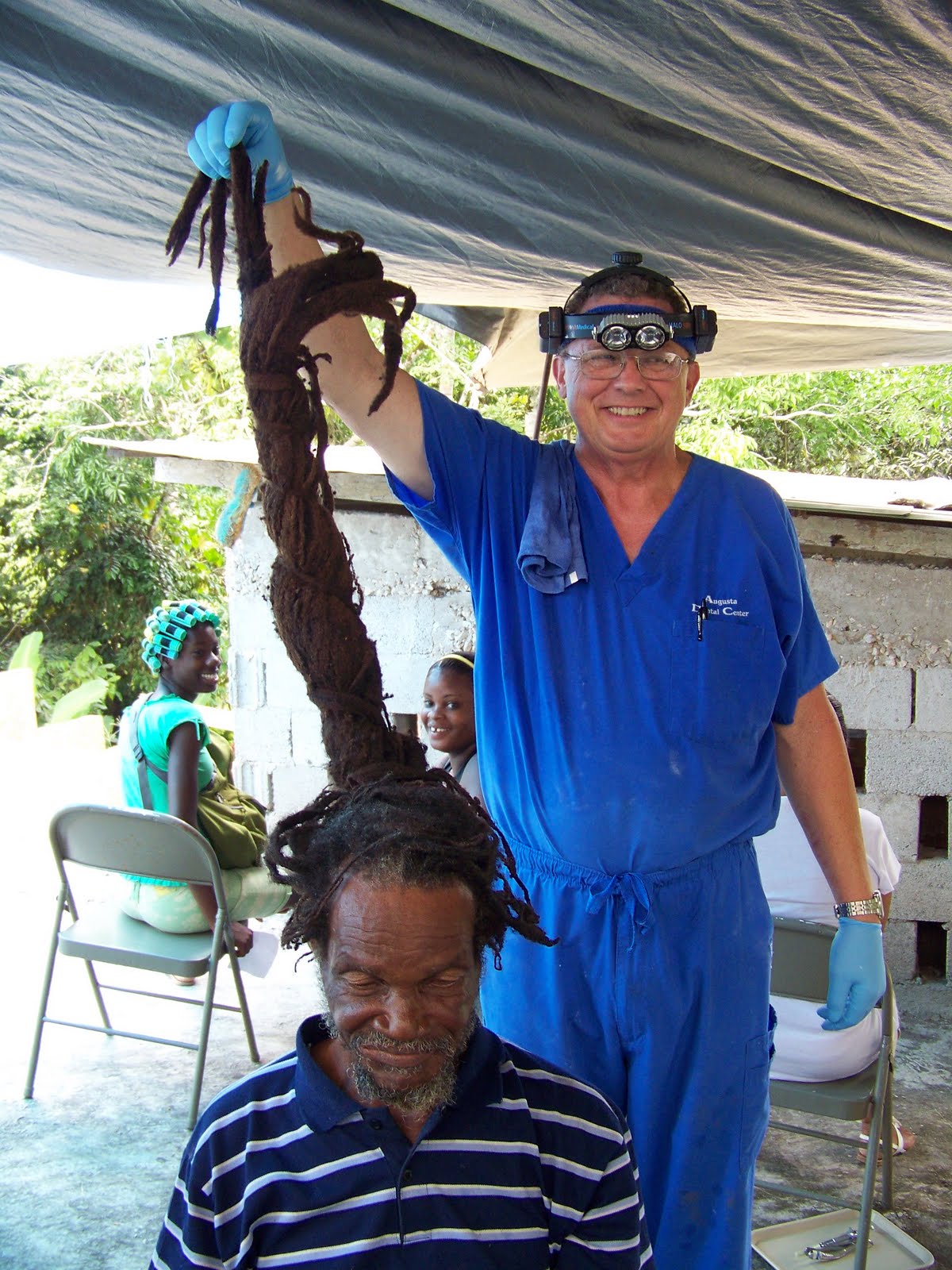
I just returned from my third medical mission in 4 months. Each of the teams had a different lead doctor, a different cast of characters, and a different mission. We had a team in west Africa to end June. Then at the end of August we had a team in Honduras. Saturday night I returned from a great week with our Jamaica team. This group offered medical and dental care in St. Mary's Parish in rural eastern Jamaica. It was a phenomenal week as we worked in different mountain locations, at the infirmary, and with our host organization ACE. I'll share some stories later. In the meantime, here are a few photos to warm body and soul!


Saturday, October 22, 2011
Blogs/Articles of Note This Week
Here are some of the stories that got my attention:
A great read at God Disappoints
Best Halloween themed ministry note is Zombie Church
Instructive Evangelism
Check out Short Videos on Every Book of the Bible
"Work harder, feel emptier, buy more, grow poorer...work harder." Stewardship
For UM's interested in GC2012 United Methodist Pope and Problems of Consolidation
And the last item discusses proposals for UMC Ordination
A great read at God Disappoints
Best Halloween themed ministry note is Zombie Church
Instructive Evangelism
Check out Short Videos on Every Book of the Bible
"Work harder, feel emptier, buy more, grow poorer...work harder." Stewardship
For UM's interested in GC2012 United Methodist Pope and Problems of Consolidation
And the last item discusses proposals for UMC Ordination
Friday, October 21, 2011
Future of Seminary Education
Here's an intriguing dialogue about the future of seminary education. I found the 9 articles of the "featured content" of online symposium useful reading. I was rather surprised that the featured presenters were all Anglo. The future church and future clergy are bound to be more diverse than that if we are doing our job and preparing for the next generation!
Thursday, October 20, 2011
UMC Millenial Leaders
I read an interesting blog today about the Millennial generation but had MANY questions. I'm curious if those of you in that age bracket would agree with these ideas, or if this is more a Catalyst culture millennial insight. It read to me as if they had a brainstorming session with a few people over lunch and made up a somewhat random list.
If you are a millennial clergy, or in church leadership of some sort and a millennial, I'd especially be curious about your thoughts as your generation interacts with older leadership. What do you millennials say? As is often the case when I read a broad discussion of a generation I admit I'm somewhat skeptical. You folk born after 1980 could help me with your clarifications and additions to the list below. I do want to learn more about what it means for the millennials to step into leadership and how we might best engage that age group.
The full post, 20 Points on Leading Millenials, is here. I've edited down to the main points and then included my thoughts or questions in italics.
If you are a millennial clergy, or in church leadership of some sort and a millennial, I'd especially be curious about your thoughts as your generation interacts with older leadership. What do you millennials say? As is often the case when I read a broad discussion of a generation I admit I'm somewhat skeptical. You folk born after 1980 could help me with your clarifications and additions to the list below. I do want to learn more about what it means for the millennials to step into leadership and how we might best engage that age group.
The full post, 20 Points on Leading Millenials, is here. I've edited down to the main points and then included my thoughts or questions in italics.
A good friend asked me the other day my thoughts on how to lead the millennial generation, basically those born after 1980. We gather thousands of leaders who fit this category on an annual basis, and most of our Catalyst staff are under the age of 30.If any of this crew can speak to my questions that would be really helpful!
I have to admit- I don’t always get this right. As a 100% Gen X’er, my tendency is to lean away from several of these points, and lead how I’ve been led over the years by Boomer and Busters. But I’m working on it…. What are comparable business environments using large numbers of millenials and creating this sort of dynamic illustrated below? Is it Google, Facebook, etc. or some other business? Any churches or ministry groups with a crowd that age doing this?
So with that said, here you go, thoughts on leading millenials:
1. Give them freedom with their schedule. I’ll admit, this one is tough for me. What does this mean?? How does this work? What does it look like?
2. Provide them projects, not a career. Career is just not the same anymore. They desire options. Just like free agents. Interesting... but refer to my questions in #1 and give some specifics.
3. Create a family environment. Work, family and social are all intertwined, so make sure the work environment is experiential and family oriented. Everything is connected. This often works well in ministry, but then sometimes the demands of ministry demand the attention. What does "experiential" work mean?
4. Cause is important. Tie in compassion and justice to the “normal.” Causes and opportunities to give back are important. This is easy enough to do with ministry though sometimes this constant is a challenge. What is the typical life span of a millennial doing Catalyst work?
5. Embrace social media. it’s here to stay. Okie dokie, that makes sense.
6. They are more tech savvy than any other generation ever. Technology is the norm. XBOX, iPhones, laptops, iPads are just normal. If you want a response, text first, then call. Or DM first. Or send a Facebook message. Not anti calls though. K
7. Lead each person uniquely. Don’t create standards or rules that apply to everyone. Customize your approach. (I’ll admit, this one is difficult too!) I'm curious on this one. Are you talking about more than personality differences? How does this work in a large organization?
8. Make authenticity and honesty the standard for your corporate culture. Millenials are cynical at their core, and don’t trust someone just because they are in charge.
The 1st sentence makes perfect sense. Re the 2nd- Really, how cynical? What does this mean re. supervision?
9. Millenials are not as interested in “climbing the corporate ladder.” But instead more concerned about making a difference and leaving their mark. Is this true for the whole generation? I know some folk that seem to be fairly adept at climbing the ladder! HOW do folk want to "make a difference and leave their mark?" I don't see the generation geared to this unless you mean something different than what I understand in the statement.
10. Give them opportunities early with major responsibility. They don’t want to wait their turn. Want to make a difference now. And will find an outlet for influence and responsibility somewhere else if you don’t give it to them. Empower them early and often. I actually find this to be one of my favorites on the list. How might a ministry organization or denomination best do this?
11. All about the larger win, not the personal small gain. Young leaders in general have an abundance mentality instead of scarcity mentality. What do you mean by this? Give an example of what this could mean in a ministry.
12. Partnering and collaboration are important. Not interested in drawing lines. Collaboration is the new currency, along with generosity. This is awesome if we are going to tackle some big issues of the day.
13. Not about working for a personality. Not interested in laboring long hours to build a temporal kingdom for one person. But will work their guts out for a cause and vision bigger than themselves. I like this thought but not sure what it means in relation to #1 &2.
14. Deeply desire mentoring, learning and discipleship. Many older leaders think millenials aren’t interested in generational wisdom transfer. Not true at all. Younger leaders are hungry for mentoring and discipleship, so build it into your organizational environment. Please give an example of what you mean and what this looks like.
15. Coach them and encourage them. They want to gain wisdom through experience. Come alongside them don’t just tell them what to do. This is potentially anther favorite though I do have significant questions. What does such an apprentice model look like in your ministry or work? Does this mean, similar to the rec department with kids, that everyone needs a trophy and "atta boy" for each project? If they want to be handed responsibility and we are to treat each person uniquely what does that style coaching look like in Catalyst or with millenials? How would any of this be different than a previous generation?
16. Create opportunities for quality time- individually and corporately. They want to be led by example, and not just by words. What is "quality time" in this context? Give an example
17. Hold them accountable. They want to be held accountable by those who are living it out. Measure them and give them constant feedback. What does it mean to give "constant feedback" at Catalyst? What is the ratio of supervisors to workers? What does this look like in other ministries or workplaces that have a high concentration of millenials?
18. They’ve been exposed to just about everything, so the sky is the limit in their minds. Older leaders have to understand younger leaders have a much broader and global perspective, which makes wowing Millenials much more difficult. Again, I'm drawn to this one but not sure I'm getting it all. What do you mean? What does this look like in the workplace?
19. Recognize their values, not just their strengths. It ain’t just about the skillz baby. Don’t use them without truly knowing them. This is another one I appreciate yet have some questions about. Is this that bridge between personal and professional as mentioned above? For some reason "The Office" just flashed in my mind! Do you do this both formally and informally? Asked another way, does personnel or human resources evaluations do this? I'd love to see an example of that eval form!
20. Provide a system that creates stability. Clear expectations with the freedom to succeed, and providing stability on the emotional, financial, and organizational side. Again, what does this mean and what does it look like?
Thanks to the Catalyst team and our band of millenials for their input and advice on these points. James Wilson, Julianne Graves, Sabrina Esposito, Alyssa Raymer, Stan Johnson, and Ansley Lawhead. You guys provided great insight!
Wednesday, October 19, 2011
Togo Dancing
It's a cloudy day in Georgia, and a perfect time to catch up on some of the summer videos from our mission teams. Here's a short clip from our missionary friend Dr. Esaho Kipuke at the Women's Training Center with Pya, Togo Dancing.
Tuesday, October 18, 2011
Death-- Close and Personal
My 90 year old grandmother died last Thursday at the old family homestead near Savannah, Georgia. The last few years had been tough for her as Alzheimer's took its toll, and then somewhat related to that, she broke both hips in the last year as she forgot she still couldn't do everything she could in days gone by.

My mother retired last autumn after Grandmother broke the first hip trying to hang up clothes outside. Grandmother has a clothes dryer, but wouldn't use it, as she thought it cost too much to operate. Plus, you spend so many years hanging clothes out on a clothesline and it's a daily habit.
The plan was to get Grandmom back to some degree of health, and get her back home. So, mom took that plunge into taking care of her mom who was forgetting everything except that sense of independence, stubbornness, and will to go and do that most of us have until the end. She was always a woman of deep Christian faith, with great assurance and confidence, who was also opinionated and decisive! As time went by the fixation on the return home became more pronounced. My mom got her mom's home renovated to accommodate the wheelchair Grandmom was now confined to. After returning home from the first hip break she got up in the middle of the night and fell and broke the 2nd hip.

But the old country girl, eldest child of her family, was made of tough stuff and eventually returned home again. That was where she was the most happy as she could tend her garden, visit with family and friends, and soak up the south Georgia life that she knew so well.
That was where she always wanted to be. At home. In the garden. In the kitchen. Visiting with those she loved.
I got the call last week that hospice was beginning home visits. Suddenly the normal routine changed. A couple of days later it was obvious that Grandmom was spiraling down fast as she went into a deep rest. Last Thursday I left Augusta, passed the gnat line, and left the piedmont area to go home to Bryan County to see Grandmom one last time.
As the day wore on the changes were becoming more obvious, more pronounced. This clergy, who has sat with families as they waited on the death of a loved one, could see all the signs.
Family and neighbors still visit and wait with you through such a time as this back home. In my county the funeral home director still drives to your house to make arrangements, even though Grandmom lived 25 miles from the county seat town. And when you can't remember a name, or can only think of where they live, he is quick to help you make the connections that your mind can't quite recall in such tender, emotional moments.
I said my goodbyes to family and friends. I said my last goodbye to Grandmom and told her it was time for me to go home, and that it was time for her to go home.
I got about half way home last Thursday, and got the call when I was in Millen that Grandmom had passed peacefully from this life into the next. I felt that odd mix of grief and relief that you feel when a loved one has battled for so many years.
The scattered family gathered back home to honor the matriarch of the family. Grandmom was always the one who seemed to know all the family names, and details, and history. Her daddy was a Brown, and her momma a Duke. She married my granddaddy, Lavert Bazemore, and thus I'm related to half of south Georgia!
My grandfather died in 1975, and my Southern Baptist, Eastern Star, "hair always in place" grandmom eventually remarried a number of years later. She lived in Savannah through both marriages and outlived two husbands. Then she came back to the farm in Ellabell that her daddy bought after the family was displaced with the establishment of Camp Stewart (now Fort Stewart).
Mae Belle Brown Bazemore Larrimore, my grandmother, died last week. We had visitation Sunday afternoon in Pembroke GA and I saw a few of the elders with most of the crowd now being the children who are now old! How have so many years gone by so quickly?!

The funeral was at 11:00 AM Monday and held at Olive Branch Baptist Church, in Ellabell, which is a half mile from the "home place." It was like a family reunion. Of course, reintroductions had to be made as we all peered deeply into each others eyes attempting to see through 20-25 years! Stories were told. Some of the years were caught up on. The new, old words of faith were shared again as we all experienced death up close and personal. Scripture was shared and songs of faith were sung, including Grandmom's favorite, "Beulah Land." Then we gathered for lunch in the fellowship hall. It was mostly homemade, home grown, lovingly prepared and brought down to the church by family and friends.

Since Savannah doesn't provide police escort of funeral processions anymore we had a leisurely lunch and afternoon before the trip to Savannah. The burial was at 2:30 PM in Forest Lawn Cemetery in old Savannah where my grandfather was buried.

Having grown up on a farm I know that there is a certain cycle, and a certain season, that eventually brings life to death. That is not a thing to be fearful of, or to hide from, but something to accept and to live with in a sense of reality that feeds life. Yet, I also know from both faith and experience, that death isn't the end of our story as we follow the God who continues to redeem and create! This isn't a naive thought, or a simple challenge; this is a daily struggle as the journey of life and faith continues as we follow Christ from one room in the "house" into other rooms. Even though I've once again seen death up close and personal I have even greater assurance that this life is preparation for an even greater Hope, Love, Joy, and Peace which I will experience one day.
Thank you Grandmom, and thank you God, for so many years and for all the blessings you have passed on to me and to so many others. May I continue to grow day by day to be a blessing as I follow the Risen Christ!
"If we live, we live to the Lord; and if we die, we die to the Lord. So, whether we live or die, we belong to the Lord."


My mother retired last autumn after Grandmother broke the first hip trying to hang up clothes outside. Grandmother has a clothes dryer, but wouldn't use it, as she thought it cost too much to operate. Plus, you spend so many years hanging clothes out on a clothesline and it's a daily habit.
The plan was to get Grandmom back to some degree of health, and get her back home. So, mom took that plunge into taking care of her mom who was forgetting everything except that sense of independence, stubbornness, and will to go and do that most of us have until the end. She was always a woman of deep Christian faith, with great assurance and confidence, who was also opinionated and decisive! As time went by the fixation on the return home became more pronounced. My mom got her mom's home renovated to accommodate the wheelchair Grandmom was now confined to. After returning home from the first hip break she got up in the middle of the night and fell and broke the 2nd hip.

But the old country girl, eldest child of her family, was made of tough stuff and eventually returned home again. That was where she was the most happy as she could tend her garden, visit with family and friends, and soak up the south Georgia life that she knew so well.
That was where she always wanted to be. At home. In the garden. In the kitchen. Visiting with those she loved.
I got the call last week that hospice was beginning home visits. Suddenly the normal routine changed. A couple of days later it was obvious that Grandmom was spiraling down fast as she went into a deep rest. Last Thursday I left Augusta, passed the gnat line, and left the piedmont area to go home to Bryan County to see Grandmom one last time.
As the day wore on the changes were becoming more obvious, more pronounced. This clergy, who has sat with families as they waited on the death of a loved one, could see all the signs.
Family and neighbors still visit and wait with you through such a time as this back home. In my county the funeral home director still drives to your house to make arrangements, even though Grandmom lived 25 miles from the county seat town. And when you can't remember a name, or can only think of where they live, he is quick to help you make the connections that your mind can't quite recall in such tender, emotional moments.
I said my goodbyes to family and friends. I said my last goodbye to Grandmom and told her it was time for me to go home, and that it was time for her to go home.
I got about half way home last Thursday, and got the call when I was in Millen that Grandmom had passed peacefully from this life into the next. I felt that odd mix of grief and relief that you feel when a loved one has battled for so many years.
The scattered family gathered back home to honor the matriarch of the family. Grandmom was always the one who seemed to know all the family names, and details, and history. Her daddy was a Brown, and her momma a Duke. She married my granddaddy, Lavert Bazemore, and thus I'm related to half of south Georgia!
My grandfather died in 1975, and my Southern Baptist, Eastern Star, "hair always in place" grandmom eventually remarried a number of years later. She lived in Savannah through both marriages and outlived two husbands. Then she came back to the farm in Ellabell that her daddy bought after the family was displaced with the establishment of Camp Stewart (now Fort Stewart).
Mae Belle Brown Bazemore Larrimore, my grandmother, died last week. We had visitation Sunday afternoon in Pembroke GA and I saw a few of the elders with most of the crowd now being the children who are now old! How have so many years gone by so quickly?!

The funeral was at 11:00 AM Monday and held at Olive Branch Baptist Church, in Ellabell, which is a half mile from the "home place." It was like a family reunion. Of course, reintroductions had to be made as we all peered deeply into each others eyes attempting to see through 20-25 years! Stories were told. Some of the years were caught up on. The new, old words of faith were shared again as we all experienced death up close and personal. Scripture was shared and songs of faith were sung, including Grandmom's favorite, "Beulah Land." Then we gathered for lunch in the fellowship hall. It was mostly homemade, home grown, lovingly prepared and brought down to the church by family and friends.
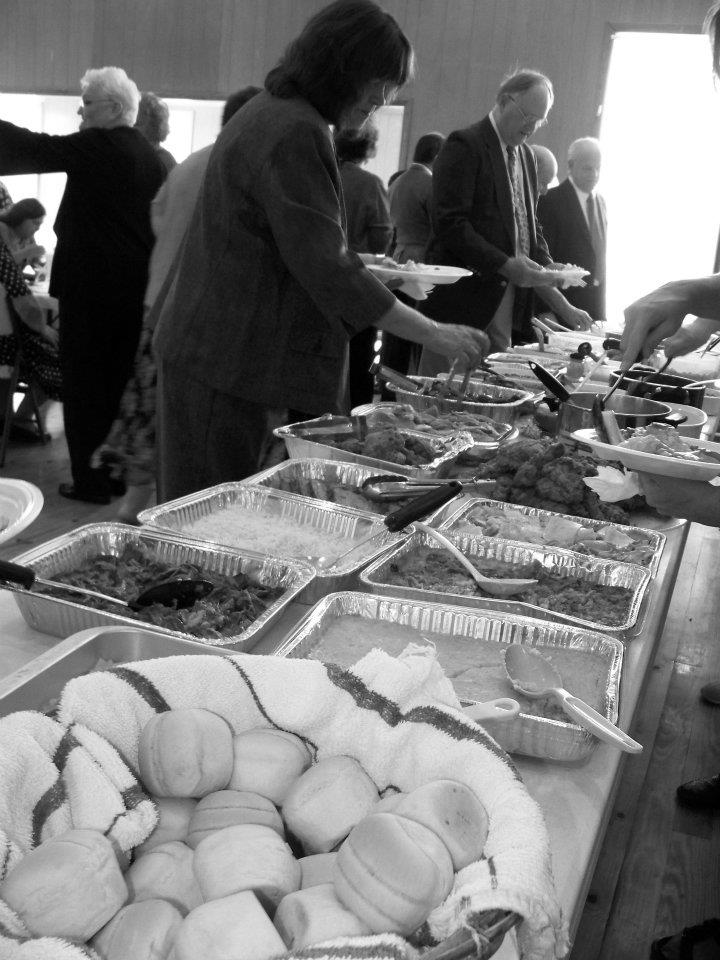
Since Savannah doesn't provide police escort of funeral processions anymore we had a leisurely lunch and afternoon before the trip to Savannah. The burial was at 2:30 PM in Forest Lawn Cemetery in old Savannah where my grandfather was buried.

Having grown up on a farm I know that there is a certain cycle, and a certain season, that eventually brings life to death. That is not a thing to be fearful of, or to hide from, but something to accept and to live with in a sense of reality that feeds life. Yet, I also know from both faith and experience, that death isn't the end of our story as we follow the God who continues to redeem and create! This isn't a naive thought, or a simple challenge; this is a daily struggle as the journey of life and faith continues as we follow Christ from one room in the "house" into other rooms. Even though I've once again seen death up close and personal I have even greater assurance that this life is preparation for an even greater Hope, Love, Joy, and Peace which I will experience one day.
Thank you Grandmom, and thank you God, for so many years and for all the blessings you have passed on to me and to so many others. May I continue to grow day by day to be a blessing as I follow the Risen Christ!
"If we live, we live to the Lord; and if we die, we die to the Lord. So, whether we live or die, we belong to the Lord."

Sunday, October 16, 2011
Let's Provoke One Another the Right Way
Here's a classic sermon which all Methodists should review from time to time. Look for the title and for the phrase "his obedience is in proportion to his love" or the "one business of his life."
The Character of a Methodist
John Wesley
1. THE distinguishing marks of a Methodist are not his opinions of any sort. His assenting to this or that scheme of religion, his embracing any particular set of notions, his espousing the judgment of one man or of another, are all quite wide of the point. Whosoever, therefore, imagines that a Methodist is a man of such or such an opinion, is grossly ignorant of the whole affair; he mistakes the truth totally. We believe, indeed, that "all Scripture is given by the inspiration of God;" and herein we are distinguished from Jews, Turks, and Infidels. We believe the written word of God to be the only and sufficient rule both of Christian faith and practice; and herein we are fundamentally distinguished from those of the Romish Church. We believe Christ to be the eternal, supreme God; and herein we are distinguished from the Socinians and Arians. But as to all opinions which do not strike at the root of Christianity, we think and let think. So that whatsoever they are, whether right or wrong, they are no distinguishing marks of a Methodist.
2. Neither are words or phrases of any sort. We do not place our religion, or any part of it, in being attached to any peculiar mode of speaking, any quaint or uncommon set of expressions. The most obvious, easy, common words, wherein our meaning can be conveyed, we prefer before others, both on ordinary occasions, and when we speak of the things of God. We never, therefore, willingly or designedly, deviate from the most usual way of speaking; unless when we express scripture truths in scripture words, which, we presume, no Christian will condemn. Neither do we affect to use any particular expressions of Scripture more frequently than others, unless they are such as are more frequently used by the inspired writers themselves. So that it is as gross an error, to place the marks of a Methodist in his words, as in opinions of any sort.
3. Nor do we desire to be distinguished by actions, customs, or usages, of an indifferent nature. Our religion does not lie in doing what God has not enjoined, or abstaining from what he hath not forbidden. It does not lie in the form of our apparel, in the posture of our body, or the covering of our heads; nor yet in abstaining from marriage, or from meats and drinks, which are all good if received with thanksgiving. Therefore, neither will any man, who knows whereof he affirms, fix the mark of a Methodist here, -- in any actions or customs purely indifferent, undetermined by the word of God.
4. Nor, lastly, is he distinguished by laying the whole stress of religion on any single part of it. If you say, "Yes, he is; for he thinks 'we are saved by faith alone:'" I answer, You do not understand the terms. By salvation he means holiness of heart and life. And this he affirms to spring from true faith alone. Can even a nominal Christian deny it? Is this placing a part of religion for the whole? "Do we then make void the law through faith? God forbid! Yea, we establish the law." We do not place the whole of religion (as too many do, God knoweth) either in doing no harm, or in doing good, or in using the ordinances of God. No, not in all of them together; wherein we know by experience a man may labour many years, and at the end have no religion at all, no more than he had at the beginning. Much less in any one of these; or, it may be, in a scrap of one of them: Like her who fancies herself a virtuous woman, only because she is not a prostitute; or him who dreams he is an honest man, merely because he does not rob or steal. May the Lord God of my fathers preserve me from such a poor, starved religion as this! Were this the mark of a Methodist, I would sooner choose to be a sincere Jew, Turk, or Pagan.
5. "What then is the mark? Who is a Methodist, according to your own account?" I answer: A Methodist is one who has "the love of God shed abroad in his heart by the Holy Ghost given unto him;" one who "loves the Lord his God with all his heart, and with all his soul, and with all his mind, and with all his strength. God is the joy of his heart, and the desire of his soul; which is constantly crying out, "Whom have I in heaven but thee? and there is none upon earth that I desire beside thee! My God and my all! Thou art the strength of my heart, and my portion for ever!"
6. He is therefore happy in God, yea, always happy, as having in him "a well of water springing up into everlasting life," and overflowing his soul with peace and joy. "Perfect love" having now "cast out fear," he "rejoices evermore." He "rejoices in the Lord always," even "in God his Saviour;" and in the Father, "through our Lord Jesus Christ, by whom he hath now received the atonement." "Having" found "redemption through his blood, the forgiveness of his sins," he cannot but rejoice, whenever he looks back on the horrible pit out of which he is delivered; when he sees "all his transgressions blotted out as a cloud, and his iniquities as a thick cloud." He cannot but rejoice, whenever he looks on the state wherein he now is; "being justified freely, and having peace with God through our Lord Jesus Christ." For "he that believeth, hath the witness" of this "in himself;" being now the son of God by faith. "Because he is a son, God hath sent forth the Spirit of his Son into his heart, crying, Abba, Father!" And "the Spirit itself beareth witness with his spirit, that he is a child of God." He rejoiceth also, whenever he looks forward, "in hope of the glory that shall be revealed;" yea, this his joy is full, and all his bones cry out, "Blessed be the God and Father of our Lord Jesus Christ, who, according to his abundant mercy, hath begotten me again to a living hope -- of an inheritance incorruptible, undefiled, and that fadeth not away, reserved in heaven for me!"
7. And he who hath this hope, thus "full of immortality, in everything giveth thanks;" as knowing that this (whatsoever it is) "is the will of God in Christ Jesus concerning him." From him, therefore, he cheerfully receives all, saying, "Good is the will of the Lord;" and whether the Lord giveth or taketh away, equally "blessing the name of the Lord." For he hath "learned, in whatsoever state he is, therewith to be content." He knoweth "both how to be abased and how to abound. Everywhere and in all things he is instructed both to be full and to be hungry, both to abound and suffer need." Whether in ease or pain, whether in sickness or health, whether in life or death, he giveth thanks from the ground of his heart to Him who orders it for good; knowing that as "every good gift cometh from above," so none but good can come from the Father of Lights, into whose hand he has wholly committed his body and soul, as into the hands of a faithful Creator. He is therefore "careful" (anxiously or uneasily) "for nothing;" as having "cast all his care on Him that careth for him," and "in all things" resting on him, after "making his request known to him with thanksgiving."
8. For indeed he "prays without ceasing." It is given him "always to pray, and not to faint." Not that he is always in the house of prayer; though he neglects no opportunity of being there. Neither is he always on his knees, although he often is, or on his face, before the Lord his God. Nor yet is he always crying aloud to God, or calling upon him in words: For many times "the Spirit maketh intercession for him with groans that cannot be uttered." But at all times the language of his heart is this: "Thou brightness of the eternal glory, unto thee is my heart, though without a voice, and my silence speaketh unto thee." And this is true prayer, and this alone. But his heart is ever lifted up to God, at all times and in all places. In this he is never hindered, much less interrupted, by any person or thing. In retirement or company, in leisure, business, or conversation, his heart is ever with the Lord. Whether he lie down or rise up, God is in all his thoughts; he walks with God continually, having the loving eye of his mind still fixed upon him, and everywhere "seeing Him that is invisible."
9. And while he thus always exercises his love to God, by praying without ceasing, rejoicing evermore, and in everything giving thanks, this commandment is written in his heart, "That he who loveth God, love his brother also." And he accordingly loves his neighbour as himself; he loves every man as his own soul. His heart is full of love to all mankind, to every child of "the Father of the spirits of all flesh." That a man is not personally known to him, is no bar to his love; no, nor that he is known to be such as he approves not, that he repays hatred for his good-will. For he "loves his enemies;" yea, and the enemies of God, "the evil and the unthankful." And if it be not in his power to "do good to them that hate him," yet he ceases not to pray for them, though they continue to spurn his love, and still "despitefully use him and persecute him."
10. For he is "pure in heart." The love of God has purified his heart from all revengeful passions, from envy, malice, and wrath, from every unkind temper or malign affection. It hath cleansed him from pride and haughtiness of spirit, whereof alone cometh contention. And he hath now "put on bowels of mercies, kindness, humbleness of mind, meekness, longsuffering:" So that he "forbears and forgives, if he had a quarrel against any; even as God in Christ hath forgiven him." And indeed all possible ground for contention, on his part, is utterly cut off. For none can take from him what he desires; seeing he "loves not the world, nor" any of "the things of the world;" being now "crucified to the world, and the world crucified to him;" being dead to all that is in the world, both to "the lust of the flesh, the lust of the eye, and the pride of life." For "all his desire is unto God, and to the remembrance of his name."
11. Agreeable to this his one desire, is the one design of his life, namely, "not to do his own will, but the will of Him that sent him." His one intention at all times and in all things is, not to please himself, but Him whom his soul loveth. He has a single eye. And because "his eye is single, his whole body is full of light." Indeed, where the loving eye of the soul is continually fixed upon God, there can be no darkness at all, "but the whole is light; as when the bright shining of a candle doth enlighten the house." God then reigns alone. All that is in the soul is holiness to the Lord. There is not a motion in his heart, but is according to his will. Every thought that arises points to Him, and is in obedience to the law of Christ.
12. And the tree is known by its fruits. For as he loves God, so he keeps his commandments; not only some, or most of them, but all, from the least to the greatest. He is not content to "keep the whole law, and offend in one point;" but has, in all points, "a conscience void of offence towards God and towards man." Whatever God has forbidden, he avoids; whatever God hath enjoined, he doeth; and that whether it be little or great, hard or easy, joyous or grievous to the flesh. He "runs the way of God's commandments," now he hath set his heart at liberty. It is his glory so to do; it is his daily crown of rejoicing, "to do the will of God on earth, as it is done in heaven;" knowing it is the highest privilege of "the angels of God, of those that excel in strength, to fulfil his commandments, and hearken to the voice of his word."
13. All the commandments of God he accordingly keeps, and that with all his might. For his obedience is in proportion to his love, the source from whence it flows. And therefore, loving God with all his heart, he serves him with all his strength. He continually presents his soul and body a living sacrifice, holy, acceptable to God; entirely and without reserve devoting himself, all he has, and all he is, to his glory. All the talents he has received, he constantly employs according to his Master's will; every power and faculty of his soul, every member of his body. Once he "yielded" them "unto sin" and the devil, "as instruments of unrighteousness;" but now, "being alive from the dead, he yields" them all "as instruments of righteousness unto God."
14. By consequence, whatsoever he doeth, it is all to the glory of God. In all his employments of every kind, he not only aims at this, (which is implied in having a single eye,) but actually attains it. His business and refreshments, as well as his prayers, all serve this great end. Whether he sit in his house or walk by the way, whether he lie down or rise up, he is promoting, in all he speaks or does, the one business of his life; whether he put on his apparel, or labour, or eat and drink, or divert himself from too wasting labour, it all tends to advance the glory of God, by peace and good-will among men. His one invariable rule is this, "Whatsoever ye do, in word or deed, do it all in the name of the Lord Jesus, giving thanks to God and the Father by him." >
15. Nor do the customs of the world at all hinder his "running the race that is set before him." He knows that vice does not lose its nature, though it becomes ever so fashionable; and remembers, that "every man is to give an account of himself to God." He cannot, therefore, "follow" even "a multitude to do evil." He cannot "fare sumptuously every day," or "make provision for the flesh to fulfil the lusts thereof." He cannot "lay up treasures upon earth," any more than he can take fire into his bosom. He cannot "adorn himself," on any pretence, "with gold or costly apparel." He cannot join in or countenance any diversion which has the least tendency to vice of any kind. He cannot "speak evil" of his neighbour, any more than he can lie either for God or man. He cannot utter an unkind word of any one; for love keeps the door of his lips. He cannot speak "idle words;" "no corrupt communication" ever "comes out of his mouth," as is all that "which is" not "good to the use of edifying," not "fit to minister grace to the hearers." But "whatsoever things are pure, whatsoever things are lovely, whatsoever things are" justly "of good report," he thinks, and speaks, and acts, "adorning the Gospel of our Lord Jesus Christ in all things."
16. Lastly. As he has time, he "does good unto all men;" unto neighbours and strangers, friends and enemies: And that in every possible kind; not only to their bodies, by "feeding the hungry, clothing the naked, visiting those that are sick or in prison;" but much more does he labour to do good to their souls, as of the ability which God giveth; to awaken those that sleep in death; to bring those who are awakened to the atoning blood, that, "being justified by faith, they may have peace with God;" and to provoke those who have peace with God to abound more in love and in good works. And he is willing to "spend and be spent herein," even "to be offered up on the sacrifice and service of their faith," so they may "all come unto the measure of the stature of the fulness of Christ."
17. These are the principles and practices of our sect; these are the marks of a true Methodist. By these alone do those who are in derision so called, desire to be distinguished from other men. If any man say, "Why, these are only the common fundamental principles of Christianity!" thou hast said; so I mean; this is the very truth; I know they are no other; and I would to God both thou and all men knew, that I, and all who follow my judgment, do vehemently refuse to be distinguished from other men, by any but the common principles of Christianity, -- the plain, old Christianity that I teach, renouncing and detesting all other marks of distinction. And whosoever is what I preach, (let him be called what he will, for names change not the nature of things,) he is a Christian, not in name only, but in heart and in life. He is inwardly and outwardly conformed to the will of God, as revealed in the written word. He thinks, speaks, and lives, according to the method laid down in the revelation of Jesus Christ. His soul is renewed after the image of God, in righteousness and in all true holiness. And having the mind that was in Christ, he so walks as Christ also walked.
18. By these marks, by these fruits of a living faith, do we labour to distinguish ourselves from the unbelieving world from all those whose minds or lives are not according to the Gospel of Christ. But from real Christians, of whatsoever denomination they be, we earnestly desire not to be distinguished at all, not from any who sincerely follow after what they know they have not yet attained. No: "Whosoever doeth the will of my Father which is in heaven, the same is my brother, and sister, and mother." And I beseech you, brethren, by the mercies of God, that we be in no wise divided among ourselves. Is thy heart right, as my heart is with thine? I ask no farther question. If it be, give me thy hand. For opinions, or terms, let us not destroy the work of God. Dost thou love and serve God? It is enough. I give thee the right hand of fellowship. If there be any consolation in Christ, if any comfort of love, if any fellowship of the Spirit, if any bowels and mercies; let us strive together for the faith of the Gospel; walking worthy of the vocation wherewith we are called; with all lowliness and meekness, with long-suffering, forbearing one another in love, endeavouring to keep the unity of the Spirit in the bond of peace; remembering, there is one body, and one Spirit, even as we are called with one hope of our calling; "one Lord, one faith, one baptism; one God and Father of all, who is above all, and through all, and in you all."
From the Thomas Jackson edition of The Works of John Wesley, 1872.
http://new.gbgm-umc.org/umhistory/wesley/character/
The Character of a Methodist
John Wesley
1. THE distinguishing marks of a Methodist are not his opinions of any sort. His assenting to this or that scheme of religion, his embracing any particular set of notions, his espousing the judgment of one man or of another, are all quite wide of the point. Whosoever, therefore, imagines that a Methodist is a man of such or such an opinion, is grossly ignorant of the whole affair; he mistakes the truth totally. We believe, indeed, that "all Scripture is given by the inspiration of God;" and herein we are distinguished from Jews, Turks, and Infidels. We believe the written word of God to be the only and sufficient rule both of Christian faith and practice; and herein we are fundamentally distinguished from those of the Romish Church. We believe Christ to be the eternal, supreme God; and herein we are distinguished from the Socinians and Arians. But as to all opinions which do not strike at the root of Christianity, we think and let think. So that whatsoever they are, whether right or wrong, they are no distinguishing marks of a Methodist.
2. Neither are words or phrases of any sort. We do not place our religion, or any part of it, in being attached to any peculiar mode of speaking, any quaint or uncommon set of expressions. The most obvious, easy, common words, wherein our meaning can be conveyed, we prefer before others, both on ordinary occasions, and when we speak of the things of God. We never, therefore, willingly or designedly, deviate from the most usual way of speaking; unless when we express scripture truths in scripture words, which, we presume, no Christian will condemn. Neither do we affect to use any particular expressions of Scripture more frequently than others, unless they are such as are more frequently used by the inspired writers themselves. So that it is as gross an error, to place the marks of a Methodist in his words, as in opinions of any sort.
3. Nor do we desire to be distinguished by actions, customs, or usages, of an indifferent nature. Our religion does not lie in doing what God has not enjoined, or abstaining from what he hath not forbidden. It does not lie in the form of our apparel, in the posture of our body, or the covering of our heads; nor yet in abstaining from marriage, or from meats and drinks, which are all good if received with thanksgiving. Therefore, neither will any man, who knows whereof he affirms, fix the mark of a Methodist here, -- in any actions or customs purely indifferent, undetermined by the word of God.
4. Nor, lastly, is he distinguished by laying the whole stress of religion on any single part of it. If you say, "Yes, he is; for he thinks 'we are saved by faith alone:'" I answer, You do not understand the terms. By salvation he means holiness of heart and life. And this he affirms to spring from true faith alone. Can even a nominal Christian deny it? Is this placing a part of religion for the whole? "Do we then make void the law through faith? God forbid! Yea, we establish the law." We do not place the whole of religion (as too many do, God knoweth) either in doing no harm, or in doing good, or in using the ordinances of God. No, not in all of them together; wherein we know by experience a man may labour many years, and at the end have no religion at all, no more than he had at the beginning. Much less in any one of these; or, it may be, in a scrap of one of them: Like her who fancies herself a virtuous woman, only because she is not a prostitute; or him who dreams he is an honest man, merely because he does not rob or steal. May the Lord God of my fathers preserve me from such a poor, starved religion as this! Were this the mark of a Methodist, I would sooner choose to be a sincere Jew, Turk, or Pagan.
5. "What then is the mark? Who is a Methodist, according to your own account?" I answer: A Methodist is one who has "the love of God shed abroad in his heart by the Holy Ghost given unto him;" one who "loves the Lord his God with all his heart, and with all his soul, and with all his mind, and with all his strength. God is the joy of his heart, and the desire of his soul; which is constantly crying out, "Whom have I in heaven but thee? and there is none upon earth that I desire beside thee! My God and my all! Thou art the strength of my heart, and my portion for ever!"
6. He is therefore happy in God, yea, always happy, as having in him "a well of water springing up into everlasting life," and overflowing his soul with peace and joy. "Perfect love" having now "cast out fear," he "rejoices evermore." He "rejoices in the Lord always," even "in God his Saviour;" and in the Father, "through our Lord Jesus Christ, by whom he hath now received the atonement." "Having" found "redemption through his blood, the forgiveness of his sins," he cannot but rejoice, whenever he looks back on the horrible pit out of which he is delivered; when he sees "all his transgressions blotted out as a cloud, and his iniquities as a thick cloud." He cannot but rejoice, whenever he looks on the state wherein he now is; "being justified freely, and having peace with God through our Lord Jesus Christ." For "he that believeth, hath the witness" of this "in himself;" being now the son of God by faith. "Because he is a son, God hath sent forth the Spirit of his Son into his heart, crying, Abba, Father!" And "the Spirit itself beareth witness with his spirit, that he is a child of God." He rejoiceth also, whenever he looks forward, "in hope of the glory that shall be revealed;" yea, this his joy is full, and all his bones cry out, "Blessed be the God and Father of our Lord Jesus Christ, who, according to his abundant mercy, hath begotten me again to a living hope -- of an inheritance incorruptible, undefiled, and that fadeth not away, reserved in heaven for me!"
7. And he who hath this hope, thus "full of immortality, in everything giveth thanks;" as knowing that this (whatsoever it is) "is the will of God in Christ Jesus concerning him." From him, therefore, he cheerfully receives all, saying, "Good is the will of the Lord;" and whether the Lord giveth or taketh away, equally "blessing the name of the Lord." For he hath "learned, in whatsoever state he is, therewith to be content." He knoweth "both how to be abased and how to abound. Everywhere and in all things he is instructed both to be full and to be hungry, both to abound and suffer need." Whether in ease or pain, whether in sickness or health, whether in life or death, he giveth thanks from the ground of his heart to Him who orders it for good; knowing that as "every good gift cometh from above," so none but good can come from the Father of Lights, into whose hand he has wholly committed his body and soul, as into the hands of a faithful Creator. He is therefore "careful" (anxiously or uneasily) "for nothing;" as having "cast all his care on Him that careth for him," and "in all things" resting on him, after "making his request known to him with thanksgiving."
8. For indeed he "prays without ceasing." It is given him "always to pray, and not to faint." Not that he is always in the house of prayer; though he neglects no opportunity of being there. Neither is he always on his knees, although he often is, or on his face, before the Lord his God. Nor yet is he always crying aloud to God, or calling upon him in words: For many times "the Spirit maketh intercession for him with groans that cannot be uttered." But at all times the language of his heart is this: "Thou brightness of the eternal glory, unto thee is my heart, though without a voice, and my silence speaketh unto thee." And this is true prayer, and this alone. But his heart is ever lifted up to God, at all times and in all places. In this he is never hindered, much less interrupted, by any person or thing. In retirement or company, in leisure, business, or conversation, his heart is ever with the Lord. Whether he lie down or rise up, God is in all his thoughts; he walks with God continually, having the loving eye of his mind still fixed upon him, and everywhere "seeing Him that is invisible."
9. And while he thus always exercises his love to God, by praying without ceasing, rejoicing evermore, and in everything giving thanks, this commandment is written in his heart, "That he who loveth God, love his brother also." And he accordingly loves his neighbour as himself; he loves every man as his own soul. His heart is full of love to all mankind, to every child of "the Father of the spirits of all flesh." That a man is not personally known to him, is no bar to his love; no, nor that he is known to be such as he approves not, that he repays hatred for his good-will. For he "loves his enemies;" yea, and the enemies of God, "the evil and the unthankful." And if it be not in his power to "do good to them that hate him," yet he ceases not to pray for them, though they continue to spurn his love, and still "despitefully use him and persecute him."
10. For he is "pure in heart." The love of God has purified his heart from all revengeful passions, from envy, malice, and wrath, from every unkind temper or malign affection. It hath cleansed him from pride and haughtiness of spirit, whereof alone cometh contention. And he hath now "put on bowels of mercies, kindness, humbleness of mind, meekness, longsuffering:" So that he "forbears and forgives, if he had a quarrel against any; even as God in Christ hath forgiven him." And indeed all possible ground for contention, on his part, is utterly cut off. For none can take from him what he desires; seeing he "loves not the world, nor" any of "the things of the world;" being now "crucified to the world, and the world crucified to him;" being dead to all that is in the world, both to "the lust of the flesh, the lust of the eye, and the pride of life." For "all his desire is unto God, and to the remembrance of his name."
11. Agreeable to this his one desire, is the one design of his life, namely, "not to do his own will, but the will of Him that sent him." His one intention at all times and in all things is, not to please himself, but Him whom his soul loveth. He has a single eye. And because "his eye is single, his whole body is full of light." Indeed, where the loving eye of the soul is continually fixed upon God, there can be no darkness at all, "but the whole is light; as when the bright shining of a candle doth enlighten the house." God then reigns alone. All that is in the soul is holiness to the Lord. There is not a motion in his heart, but is according to his will. Every thought that arises points to Him, and is in obedience to the law of Christ.
12. And the tree is known by its fruits. For as he loves God, so he keeps his commandments; not only some, or most of them, but all, from the least to the greatest. He is not content to "keep the whole law, and offend in one point;" but has, in all points, "a conscience void of offence towards God and towards man." Whatever God has forbidden, he avoids; whatever God hath enjoined, he doeth; and that whether it be little or great, hard or easy, joyous or grievous to the flesh. He "runs the way of God's commandments," now he hath set his heart at liberty. It is his glory so to do; it is his daily crown of rejoicing, "to do the will of God on earth, as it is done in heaven;" knowing it is the highest privilege of "the angels of God, of those that excel in strength, to fulfil his commandments, and hearken to the voice of his word."
13. All the commandments of God he accordingly keeps, and that with all his might. For his obedience is in proportion to his love, the source from whence it flows. And therefore, loving God with all his heart, he serves him with all his strength. He continually presents his soul and body a living sacrifice, holy, acceptable to God; entirely and without reserve devoting himself, all he has, and all he is, to his glory. All the talents he has received, he constantly employs according to his Master's will; every power and faculty of his soul, every member of his body. Once he "yielded" them "unto sin" and the devil, "as instruments of unrighteousness;" but now, "being alive from the dead, he yields" them all "as instruments of righteousness unto God."
14. By consequence, whatsoever he doeth, it is all to the glory of God. In all his employments of every kind, he not only aims at this, (which is implied in having a single eye,) but actually attains it. His business and refreshments, as well as his prayers, all serve this great end. Whether he sit in his house or walk by the way, whether he lie down or rise up, he is promoting, in all he speaks or does, the one business of his life; whether he put on his apparel, or labour, or eat and drink, or divert himself from too wasting labour, it all tends to advance the glory of God, by peace and good-will among men. His one invariable rule is this, "Whatsoever ye do, in word or deed, do it all in the name of the Lord Jesus, giving thanks to God and the Father by him." >
15. Nor do the customs of the world at all hinder his "running the race that is set before him." He knows that vice does not lose its nature, though it becomes ever so fashionable; and remembers, that "every man is to give an account of himself to God." He cannot, therefore, "follow" even "a multitude to do evil." He cannot "fare sumptuously every day," or "make provision for the flesh to fulfil the lusts thereof." He cannot "lay up treasures upon earth," any more than he can take fire into his bosom. He cannot "adorn himself," on any pretence, "with gold or costly apparel." He cannot join in or countenance any diversion which has the least tendency to vice of any kind. He cannot "speak evil" of his neighbour, any more than he can lie either for God or man. He cannot utter an unkind word of any one; for love keeps the door of his lips. He cannot speak "idle words;" "no corrupt communication" ever "comes out of his mouth," as is all that "which is" not "good to the use of edifying," not "fit to minister grace to the hearers." But "whatsoever things are pure, whatsoever things are lovely, whatsoever things are" justly "of good report," he thinks, and speaks, and acts, "adorning the Gospel of our Lord Jesus Christ in all things."
16. Lastly. As he has time, he "does good unto all men;" unto neighbours and strangers, friends and enemies: And that in every possible kind; not only to their bodies, by "feeding the hungry, clothing the naked, visiting those that are sick or in prison;" but much more does he labour to do good to their souls, as of the ability which God giveth; to awaken those that sleep in death; to bring those who are awakened to the atoning blood, that, "being justified by faith, they may have peace with God;" and to provoke those who have peace with God to abound more in love and in good works. And he is willing to "spend and be spent herein," even "to be offered up on the sacrifice and service of their faith," so they may "all come unto the measure of the stature of the fulness of Christ."
17. These are the principles and practices of our sect; these are the marks of a true Methodist. By these alone do those who are in derision so called, desire to be distinguished from other men. If any man say, "Why, these are only the common fundamental principles of Christianity!" thou hast said; so I mean; this is the very truth; I know they are no other; and I would to God both thou and all men knew, that I, and all who follow my judgment, do vehemently refuse to be distinguished from other men, by any but the common principles of Christianity, -- the plain, old Christianity that I teach, renouncing and detesting all other marks of distinction. And whosoever is what I preach, (let him be called what he will, for names change not the nature of things,) he is a Christian, not in name only, but in heart and in life. He is inwardly and outwardly conformed to the will of God, as revealed in the written word. He thinks, speaks, and lives, according to the method laid down in the revelation of Jesus Christ. His soul is renewed after the image of God, in righteousness and in all true holiness. And having the mind that was in Christ, he so walks as Christ also walked.
18. By these marks, by these fruits of a living faith, do we labour to distinguish ourselves from the unbelieving world from all those whose minds or lives are not according to the Gospel of Christ. But from real Christians, of whatsoever denomination they be, we earnestly desire not to be distinguished at all, not from any who sincerely follow after what they know they have not yet attained. No: "Whosoever doeth the will of my Father which is in heaven, the same is my brother, and sister, and mother." And I beseech you, brethren, by the mercies of God, that we be in no wise divided among ourselves. Is thy heart right, as my heart is with thine? I ask no farther question. If it be, give me thy hand. For opinions, or terms, let us not destroy the work of God. Dost thou love and serve God? It is enough. I give thee the right hand of fellowship. If there be any consolation in Christ, if any comfort of love, if any fellowship of the Spirit, if any bowels and mercies; let us strive together for the faith of the Gospel; walking worthy of the vocation wherewith we are called; with all lowliness and meekness, with long-suffering, forbearing one another in love, endeavouring to keep the unity of the Spirit in the bond of peace; remembering, there is one body, and one Spirit, even as we are called with one hope of our calling; "one Lord, one faith, one baptism; one God and Father of all, who is above all, and through all, and in you all."
From the Thomas Jackson edition of The Works of John Wesley, 1872.
http://new.gbgm-umc.org/umhistory/wesley/character/
Saturday, October 15, 2011
Blogs of the Week-- Theology Edition
Nothing but challenge and trouble today!
United Methodist Theology
The Problem of Beth Moore
How interesting that after some of my recent blogging I found similar thoughts at Biblical Mission Strategy
Discipleship
Discipleship 2
United Methodist Theology
The Problem of Beth Moore
How interesting that after some of my recent blogging I found similar thoughts at Biblical Mission Strategy
Discipleship
Discipleship 2
Friday, October 14, 2011
UMC Districts Are the Solution
I'm continuing to think about a contextually appropriate Methodist Christian mission. And I'm continuing to study that troublesome John 4 passage. Who, in their right mind, would start a Samaritan ministry so early. So, here goes the trouble that's percolating with me these rainy Georgia days.
How does a United Methodist annual conference, or more specifically a district, go about planning for the future of its mission and ministry?
Some clarifications are in order.
I'm a "company man" in many respects and therefore not just trying to cause trouble. Really, I like strategy, love theology, and believe that the stories of faith in the Bible are still being played out today. Add a little Holy Spirit in the mix and I know that God continues to want us to let the Kingdom and His will be done on earth, and even in our denominations!
As I think about this contextually appropriate ministry I don't merely mean a district superintendent, or district committees, that "hand down" from the main office what the clergy and churches are supposed to do. We've proven this doesn't work, that the incentive isn't high, and that while we'll all put on the "game face" that none of us get excited about this institutional game that is so far removed from the work of the Kingdom. We've all been to mandatory meetings that are composed of the same annual business, the same reports, and the same "encouragements and reminders" that neither excite us for mission of the Kingdom or better equip us for leadership in following Christ and helping others to follow Him today. I'm wondering about a denominational approach that is beyond the institutional with strong local impact in mind.
Nor do I mean those district committees where we sit around talking about what we want to offer this year based on the same models and approaches we've used the last 30 years. Now, don't get me wrong I'm not just being ugly because I'm one of these folks and often in the meetings! But I know myself, group think, and institutional approaches well enough to know we get locked into routine rather easily. And the year becomes the decade becomes the career of such things before we know it. Rather, I'm thinking of the ways stronger congregations have a visioning process with focus on mission and ministry particular to their context of demographics, calling, location, and work of the Kingdom here. Such a planning process in a more aggressive, ministry motivated church will often chart a course for the next 5-10 years of impact. Why aren't annual conferences and districts as missionally motivated? It seems a great way to better know the churches and communities, and thereby make better appointments to achieve the goals. UMC districts are in a key missional strategy position yet are severely underutilized in most cases.
Recent conversations and thinking about the Kingdom of God and new ways of being a denomination have me curious about the application, approach, and leadership necessary for a vibrant UMC district. Note that a LOT of the conversation heading toward GC 2012seems to be on annual conference or congregation. I sincerely hope we don't leave out the neglected district. A strategy of renewal and reform MUST engage strategy and leadership in the UMC district!
Let me get rather pointedly specific and use the Augusta District of the North Georgia UMC as a brief case study.
If you don't know us we are a large geographic district, primarily rural, stretching from Augusta to Milledgeville, Greensboro, and Washington. Here's a map of the churches in the
Augusta District UMC. You can see it spans 11 large counties (and may even sneak across a county line somewhere to include another county). I've served this district since 1994 and still think of myself as a missionary here! We are somewhat detached from the annual conference as we are very unlike metro ATL and retain a distinct middle GA approach to life. Some clergy, OK maybe many, would see an appointment in Augusta District as a problem. Yet some clergy love the people, the churches, and the great opportunities here. You'll find 70 congregations and a few other UMC related ministry settings in the district. Many of these counties are stable to declining, and in recent years continue to see that drain of young families leaving for more favorable economic and educational options elsewhere.
Note these reported Church Membership numbers reported in 2010 and that many of the smaller congregations didn't show a count. Of course, actual worship attendance averages would be less in most cases, half would you guess on a regular Sunday? Yet, to me, this is like a roll call of all those towns and locations you might think of as familiar, as home.
Aldersgate 992
Ararat 38
Asbury 150
Barton Chapel 63
Berlin 134
Blythe 33
Boneville 33
Burns Memorial 291
Central 36
Cokesbury 261
*Covenant 146
Dearing 62
Dunns Chapel 65
Eatonton 859
Friendship 120
Gracewood 116
Greensboro 798
Grovetown 132
Harlem 530
Hephzibah 239
Hopewell 198
Lewis Memorial 863
Liberty/Greene Co 165
Liberty/Hephzibah 218
Lincolnton 307
Macedonia 205
Mann Memorial 251
Martinez 295
Marvin 429
Mesena 105
Milledgeville 1051
Mize 319
Montpelier 122
*Mosaic 293
Mt. Hope 10
Philadelphia 152
Pierce's Chapel 10
Pierce Memorial 146
*Quest 263
Riverview 178
Shiloh 163
St. James 254
St John 611
+St Mark/Marks Church Road 58
St Mark/Washington Rd 579
St Paul 133
Salem 20
*+Transformation 170
Trinity on the Hill 2546
Thomson 825
Walker 225
Warrenton 172
Washington First 349
Wesley 2735
Wesley Chapel 140
White Oak 36
Woodlawn 438
Young Memorial 128
+denotes predominantly African American congregations. While some congregations may have some diverse ethnicity's represented there aren't really any multiethnic congregations at this stage. It is noteworthy that there are 2 cross racial appointments with African American clergy serving predominantly white congregations at Marvin UMC and St. Luke.
*denotes new church starts less than 10 years old. 3 are in growing, suburban Columbia County while Transformation is in stable/declining Richmond County. The factors in urban Richmond County are radically different than the rural situations.
It's obvious that some of these congregations will close in the next decade. Yet, how will Methodism continue to share the Good News throughout the district? Will we create new partnerships among locations? return to earlier forms of circuits or pastor sharing? or develop something new and exciting which helps us to continue ministry through the district?
If you look at the demographics for these counties the UMC efforts continue to be "out of tune" with middle Georgia reality. Most of the counties represented in the Augusta district, with the exception of Columbia County, have significant African American populations. I've always heard that we've left it that way due to some agreement, whether formal or informal I don't know, with the AME and CME churches that we wouldn't establish African American congregations. Thus, Augusta/Richmond County continues in an awful spiritual decline as we do not share the gospel with the whole community and as UMC congregations fail to share the gospel with the next generation of workers and leaders who will fill the pews.
In Augusta/Richmond County the population is 201,949 with an African American population of 107,369. Yet, on any given Sunday, the United Methodist Church probably has only 200 African American brothers and sisters in worship! The spiritual segregation once spoken of as confined to the hour on Sunday has now pervaded the entire community. The younger generation of African Americans have left the historic black churches and now neither the African American congregations nor the white congregations have a voice. What does this say about our mission and ministry in the community? What does this say about our future in Augusta? How can we create a new multi ethnic reality that better mirrors the schools, the malls, the community?
If you dig into the statistics you'll quickly see that I'm not exaggerating about the present dilemma. 43% of families in Richmond County are single parent. You may also know that single parent homes tend toward poverty and myriad issues and challenges which are related to these factors. Add to this that our area has higher than state average for folk never married. The stats don't break out what percentage lives together versus truly always single, but you get the idea. 17,000 families (over 20%) fit that category of struggling city center or "urban grit." While 45% of Augusta/Richmond County considers themselves a spiritual person only 18% think it's important to attend religious services.
There are some very natural bridges here for Methodist style mission and ministry if we mobilized our resources and dreamed with God what the Kingdom might look like in Augusta. What dynamic Wesleyan style ministries could reach out to such folk if we were intentional, and had a concerted denominational effort in ministry? These are the sorts of important efforts which DON'T take place if a DS isn't missional, if districts merely do institutional business as usual, or if an annual conference doesn't engage in strategic ministry approaches in each district.
Don't even get me started on clergy who spend their career in metro ATL or merely pass through a district on their way to a "better appointment" nor on bishops who don't know a district in enough depth to give leadership. But, again, it's the system we've built together. The question isn't so much where we have been, but where we will go from here.
So, some mission questions, as I continue to find myself in a questioning mode these recent weeks:
Who is in charge of the missional/evangelistic/church strategy for UM's to reach a district? a conference? Is there such a strategist?
What directions would we go if we were more aggressive in strategy? What churches will close & what new efforts will be employed? What clergy should deploy here as best matches for the mission? What funding do we redirect so that district, churches, new church starts, Wesley Foundations, and the mission of the district is all on the same page for the next 5-10 years?
I'm convinced that UMC Districts are a driver in the future of the UMC, but we've got to be more aggressive, we've got to be more strategic, and we've got to have the right people in leadership if we are to embrace the Kingdom which is seeking to grow in Augusta.
How does a United Methodist annual conference, or more specifically a district, go about planning for the future of its mission and ministry?
Some clarifications are in order.
I'm a "company man" in many respects and therefore not just trying to cause trouble. Really, I like strategy, love theology, and believe that the stories of faith in the Bible are still being played out today. Add a little Holy Spirit in the mix and I know that God continues to want us to let the Kingdom and His will be done on earth, and even in our denominations!
As I think about this contextually appropriate ministry I don't merely mean a district superintendent, or district committees, that "hand down" from the main office what the clergy and churches are supposed to do. We've proven this doesn't work, that the incentive isn't high, and that while we'll all put on the "game face" that none of us get excited about this institutional game that is so far removed from the work of the Kingdom. We've all been to mandatory meetings that are composed of the same annual business, the same reports, and the same "encouragements and reminders" that neither excite us for mission of the Kingdom or better equip us for leadership in following Christ and helping others to follow Him today. I'm wondering about a denominational approach that is beyond the institutional with strong local impact in mind.
Nor do I mean those district committees where we sit around talking about what we want to offer this year based on the same models and approaches we've used the last 30 years. Now, don't get me wrong I'm not just being ugly because I'm one of these folks and often in the meetings! But I know myself, group think, and institutional approaches well enough to know we get locked into routine rather easily. And the year becomes the decade becomes the career of such things before we know it. Rather, I'm thinking of the ways stronger congregations have a visioning process with focus on mission and ministry particular to their context of demographics, calling, location, and work of the Kingdom here. Such a planning process in a more aggressive, ministry motivated church will often chart a course for the next 5-10 years of impact. Why aren't annual conferences and districts as missionally motivated? It seems a great way to better know the churches and communities, and thereby make better appointments to achieve the goals. UMC districts are in a key missional strategy position yet are severely underutilized in most cases.
Recent conversations and thinking about the Kingdom of God and new ways of being a denomination have me curious about the application, approach, and leadership necessary for a vibrant UMC district. Note that a LOT of the conversation heading toward GC 2012seems to be on annual conference or congregation. I sincerely hope we don't leave out the neglected district. A strategy of renewal and reform MUST engage strategy and leadership in the UMC district!
Let me get rather pointedly specific and use the Augusta District of the North Georgia UMC as a brief case study.
If you don't know us we are a large geographic district, primarily rural, stretching from Augusta to Milledgeville, Greensboro, and Washington. Here's a map of the churches in the
Augusta District UMC. You can see it spans 11 large counties (and may even sneak across a county line somewhere to include another county). I've served this district since 1994 and still think of myself as a missionary here! We are somewhat detached from the annual conference as we are very unlike metro ATL and retain a distinct middle GA approach to life. Some clergy, OK maybe many, would see an appointment in Augusta District as a problem. Yet some clergy love the people, the churches, and the great opportunities here. You'll find 70 congregations and a few other UMC related ministry settings in the district. Many of these counties are stable to declining, and in recent years continue to see that drain of young families leaving for more favorable economic and educational options elsewhere.
Note these reported Church Membership numbers reported in 2010 and that many of the smaller congregations didn't show a count. Of course, actual worship attendance averages would be less in most cases, half would you guess on a regular Sunday? Yet, to me, this is like a roll call of all those towns and locations you might think of as familiar, as home.
Aldersgate 992
Ararat 38
Asbury 150
Barton Chapel 63
Berlin 134
Blythe 33
Boneville 33
Burns Memorial 291
Central 36
Cokesbury 261
*Covenant 146
Dearing 62
Dunns Chapel 65
Eatonton 859
Friendship 120
Gracewood 116
Greensboro 798
Grovetown 132
Harlem 530
Hephzibah 239
Hopewell 198
Lewis Memorial 863
Liberty/Greene Co 165
Liberty/Hephzibah 218
Lincolnton 307
Macedonia 205
Mann Memorial 251
Martinez 295
Marvin 429
Mesena 105
Milledgeville 1051
Mize 319
Montpelier 122
*Mosaic 293
Mt. Hope 10
Philadelphia 152
Pierce's Chapel 10
Pierce Memorial 146
*Quest 263
Riverview 178
Shiloh 163
St. James 254
St John 611
+St Mark/Marks Church Road 58
St Mark/Washington Rd 579
St Paul 133
Salem 20
*+Transformation 170
Trinity on the Hill 2546
Thomson 825
Walker 225
Warrenton 172
Washington First 349
Wesley 2735
Wesley Chapel 140
White Oak 36
Woodlawn 438
Young Memorial 128
+denotes predominantly African American congregations. While some congregations may have some diverse ethnicity's represented there aren't really any multiethnic congregations at this stage. It is noteworthy that there are 2 cross racial appointments with African American clergy serving predominantly white congregations at Marvin UMC and St. Luke.
*denotes new church starts less than 10 years old. 3 are in growing, suburban Columbia County while Transformation is in stable/declining Richmond County. The factors in urban Richmond County are radically different than the rural situations.
It's obvious that some of these congregations will close in the next decade. Yet, how will Methodism continue to share the Good News throughout the district? Will we create new partnerships among locations? return to earlier forms of circuits or pastor sharing? or develop something new and exciting which helps us to continue ministry through the district?
If you look at the demographics for these counties the UMC efforts continue to be "out of tune" with middle Georgia reality. Most of the counties represented in the Augusta district, with the exception of Columbia County, have significant African American populations. I've always heard that we've left it that way due to some agreement, whether formal or informal I don't know, with the AME and CME churches that we wouldn't establish African American congregations. Thus, Augusta/Richmond County continues in an awful spiritual decline as we do not share the gospel with the whole community and as UMC congregations fail to share the gospel with the next generation of workers and leaders who will fill the pews.
In Augusta/Richmond County the population is 201,949 with an African American population of 107,369. Yet, on any given Sunday, the United Methodist Church probably has only 200 African American brothers and sisters in worship! The spiritual segregation once spoken of as confined to the hour on Sunday has now pervaded the entire community. The younger generation of African Americans have left the historic black churches and now neither the African American congregations nor the white congregations have a voice. What does this say about our mission and ministry in the community? What does this say about our future in Augusta? How can we create a new multi ethnic reality that better mirrors the schools, the malls, the community?
If you dig into the statistics you'll quickly see that I'm not exaggerating about the present dilemma. 43% of families in Richmond County are single parent. You may also know that single parent homes tend toward poverty and myriad issues and challenges which are related to these factors. Add to this that our area has higher than state average for folk never married. The stats don't break out what percentage lives together versus truly always single, but you get the idea. 17,000 families (over 20%) fit that category of struggling city center or "urban grit." While 45% of Augusta/Richmond County considers themselves a spiritual person only 18% think it's important to attend religious services.
There are some very natural bridges here for Methodist style mission and ministry if we mobilized our resources and dreamed with God what the Kingdom might look like in Augusta. What dynamic Wesleyan style ministries could reach out to such folk if we were intentional, and had a concerted denominational effort in ministry? These are the sorts of important efforts which DON'T take place if a DS isn't missional, if districts merely do institutional business as usual, or if an annual conference doesn't engage in strategic ministry approaches in each district.
Don't even get me started on clergy who spend their career in metro ATL or merely pass through a district on their way to a "better appointment" nor on bishops who don't know a district in enough depth to give leadership. But, again, it's the system we've built together. The question isn't so much where we have been, but where we will go from here.
So, some mission questions, as I continue to find myself in a questioning mode these recent weeks:
Who is in charge of the missional/evangelistic/church strategy for UM's to reach a district? a conference? Is there such a strategist?
What directions would we go if we were more aggressive in strategy? What churches will close & what new efforts will be employed? What clergy should deploy here as best matches for the mission? What funding do we redirect so that district, churches, new church starts, Wesley Foundations, and the mission of the district is all on the same page for the next 5-10 years?
I'm convinced that UMC Districts are a driver in the future of the UMC, but we've got to be more aggressive, we've got to be more strategic, and we've got to have the right people in leadership if we are to embrace the Kingdom which is seeking to grow in Augusta.
Subscribe to:
Posts (Atom)